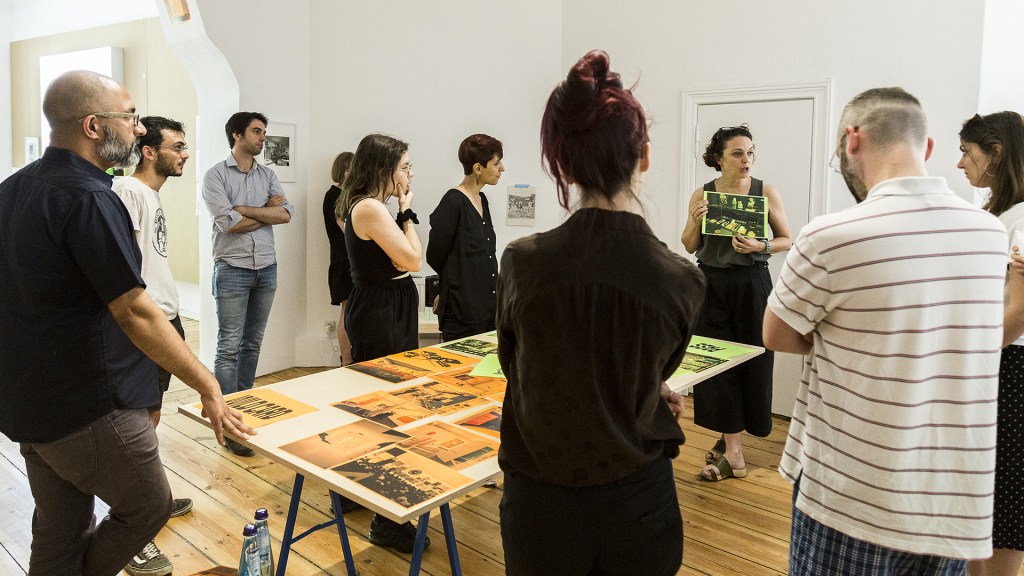
The workshops supported by this blog are often realised as a public event within the annual summer course “Introduction to Contemporary Art & Politics” at the University of Gothenburg. This page provides some information on the course and a link to the recent courses reading list.
The Introduction to Contemporary Arts and Politics (15ECTS) (Code: VFSPOL) course at HDK-Valand, University of Gothenburg is a summer course based on a combination of online presentations and seminars, together with face-to-face intensive workshops that take place in different cities each year (between early June and late August.)
This international course, delivered in English, introduces key political themes in relation to contemporary art practices, theories and institutions. It is informed by ongoing research and operates as a summer-long collaborative enquiry.
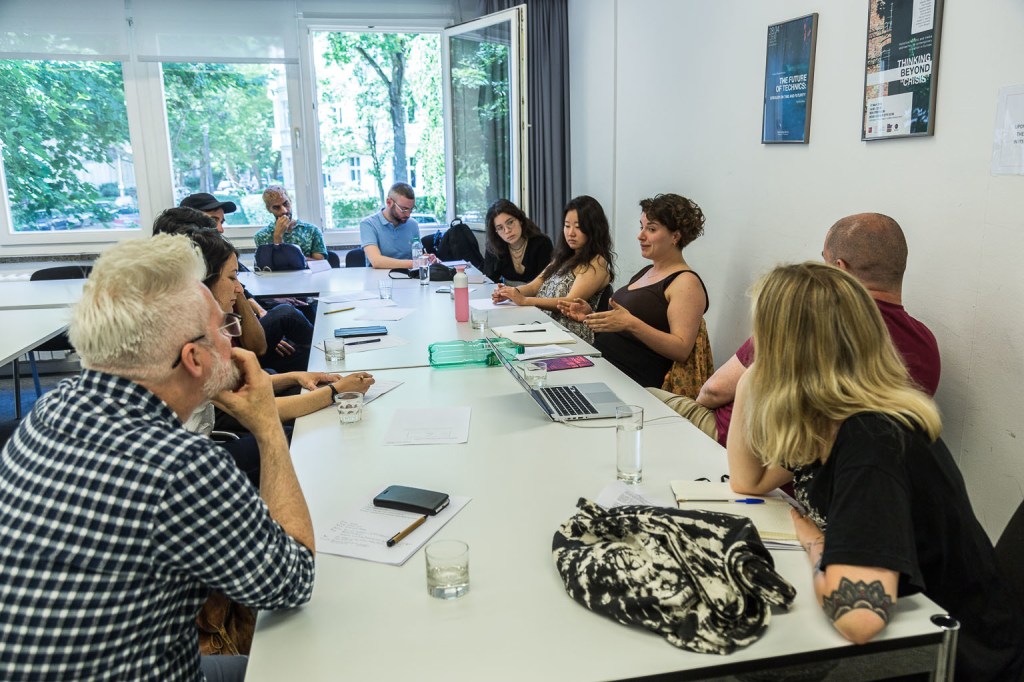
Participants are expected to actively engage online, and to attend at least one intensive workshop, typically from a choice of three in three different cities each summer. In 2021 the cities nominated are Iasi (June) and Gothenburg (August) and all events were held online. In 2020 the cities nominated were Bucharest (June) Dublin (August) and Gothenburg (August) and all events were held online. In 2019 the cities nominated were Stockholm (June) Venice (July) and Gothenburg (August). In 2018 the cities nominated were Berlin (June) London (June) and Gothenburg (August). We collaborate with different partners in each city to develop an interesting and challenging programme of activities at each intensive.
Here is an indicative reading list from our 2020 iteration of the course:
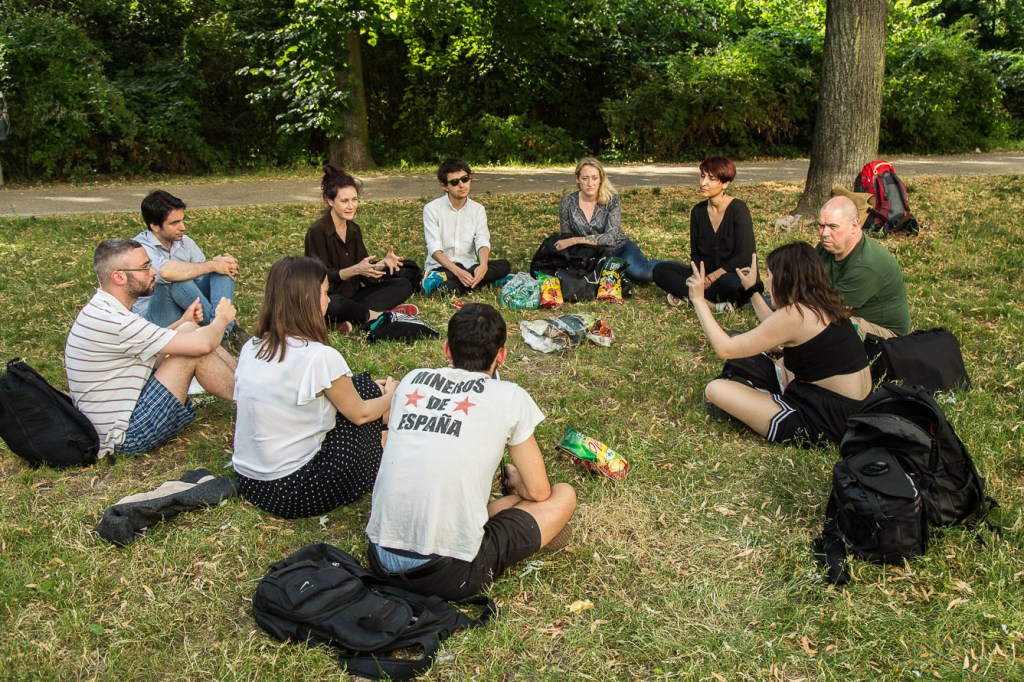
Speakers at events collaboratively organized with other partner organizations and programmes include: Paul O’Neill (2020), Anselm Franke (2020), Lara Khaldi & Noor Abed (School of Intrusions) (2020), Steven Henry Madoff (2020), QAYYEM (2020), Haseeb Ahmed (2019), Georgina Jackson (2019), Kathrin Böhm (London, 2018), Prem Krishnamurthy & Emily Smith (Berlin, 2018), Bonaventure Soh Bejeng Ndikung (Berlin, 2018), and Paul B. Preciado (Berlin, 2018). The teaching team has comprised at different times: Prof. Dave Beech, Jason E. Bowman, Kjell Caminha, Dr. Daniel Jewesbury, Prof. Andrea Phillips, Fredrik Svensk, Dr. Sarah Tuck, Dr. Arne Kjell Vikhagen, Dr. Viviana Chechhia, Dr. Cathryn Klasto and Prof. Mick Wilson.
Topics covered in the course include competing accounts of the political/politics; different readings of the emergence of the aesthetic within colonial-modernity; the nature of exhibition; the geopolitics of the art world’s globalism(s); figures of noso-, bio-, thanato-, and necro- politics; feminism and the question of eurocentrism; ecological practices and climate change responses; the political imaginary; the shift from institutional critique to infrastructural activism; and many other key themes.

The course offers an introduction to a wide range of materials and practices. It is driven by a research agenda, rather than a resolved position. The course attempts to recast the question “what are the relationships between art and politics?” into an enquiry about how the two terms, taken in conjunction, may enable an interrogation of how they each are enacted as fundamentally contested categories.
Acknowledging the complex field of theoretical, critical and activist positions that operate in the interaction of art and politics, the course takes a partial survey approach, and does not claim to be comprehensive, but does seek to achieve breadth. The course interrogates the different claims for contemporary art’s political agency and political saliency, rather than accepting these at face value.
Applications for 2022
Applications for the 2021 session are now closed. The normal application period each year is between mid-February and mid-March. Admission is based on letter of intention (preferably in English) stating why you wish to attend the course, 200 to 350 words in length.
The course is open to curators, artists, writers, and non-art specialists who have an interest in engaging with contemporary art. If you would like to receive information about the next application call in Spring 2022, please email xwimic (at) gu.se with the message header “Art & Politics 2022 Info”.
We welcome invitations to collaborate on public workshops in 2022
Each year, some of our course events are open to the wider public. Typically during the intensives when we try to visit different cities. So it is possible to access some of the course process without formally registering on the course.
 exhibition.school