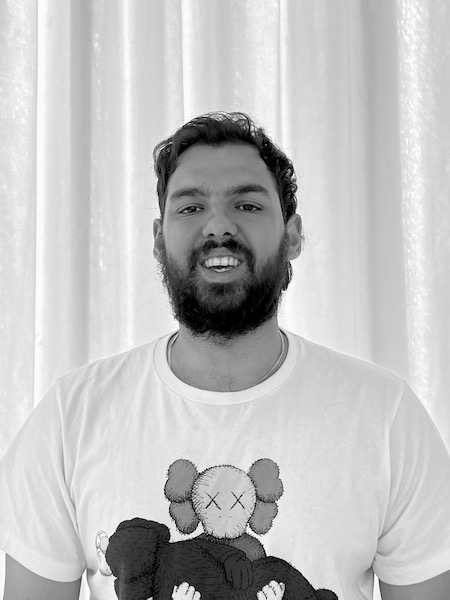
Azad Larki was born on April 4, 2001 in the city of Karaj, located near Tehran, the capital of Iran. As a child, he realized that his family’s political and religious beliefs, as well as their history of fighting against dictatorship in Iran, were different from those of his friends and others. Unfortunately, his family had lost several relatives who were captured and executed by the Islamic Republic after the revolution. The activism history of his family and his father’s political activities forced him and his family to flee from Iran when Azad was 17 years old.
In 2019, Azad and his family arrived in Sweden as asylum seekers. His situation as an asylum seeker, as well as the unfair rejection decisions made by the Swedish Migration Agency, affected him mentally. He felt a desire to express himself and share his experiences with others, hoping to change their views about him and people in his situation. Luckily, he got in touch with the Gothenburg Film Association through a language course he participated in. This gave him the opportunity to explore his creative side and express himself through film. Although the law made it difficult for him to study in Sweden, Azad received a scholarship from Ljungskile Folk High School, which allowed him to live and complete his high school education there for free. During the two years he studied in Ljungskile, he developed his debut short film “Number 11” in which he vented by describing the bizarre situation of asylum seekers in Sweden, a “democratic” country. “Number 11” won three awards at Frame Film Festival, Kultur Ungdoms Film Day prize, and Best Screenplay at Sweden’s Short Film Festival. After two years of studying at Ljungskile Folk High School, Azad graduated. However, he still did not have a residence permit and during this time, he received three rejections from the Swedish Migration Agency, which meant that their case would be closed, their stay in Sweden would become illegal, and the agency would try to deport them back to Iran, a country they had fled from. Nonetheless, he got the opportunity to start studying a course called International Culture Project Leader at Kulturverkstan.
Although the law made it difficult for him to study in Sweden, Azad received a scholarship from Ljungskile Folk High School, which allowed him to live and complete his high school education there for free. During the two years he studied in Ljungskile, he developed his debut short film “Number 11” in which he vented by describing the bizarre situation of asylum seekers in Sweden, a “democratic” country. “Number 11” won three awards at Frame Film Festival, Kultur Ungdoms Film Day prize, and Best Screenplay at Sweden’s Short Film Festival.
“The writings on the wall” (pilot version)
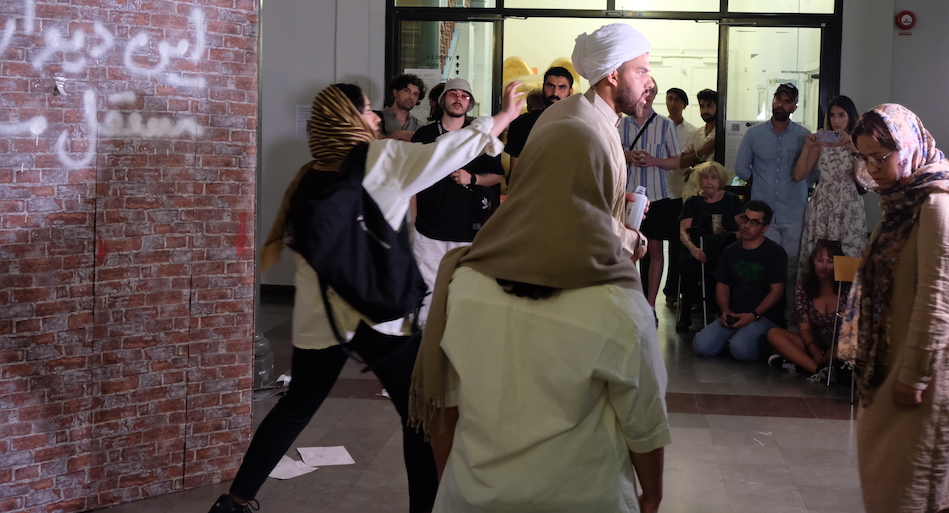
“The Writings on the Wall” is a live performance that symbolizes the struggles of Iranians on the streets and walls against an oppressive Islamic republic that has stripped away their human rights for many years. This performance begins with a group of teenagers who boldly defy the regime’s oppressive laws by writing the very words they are banned from saying on a wall. As we hear the story from a storyteller, we watch as these young people stand up for themselves and each other. However, as their movement gains momentum, so too does the oppression.
We will be creating a pilot version of this project at HDK. The performance will be set against a gallery wall, featuring three actors: a teenager fighting for freedom, a regime supporter who has been paid to quash any type of movement that goes against the regime, and an imperial storyteller. Through their performance, we will witness the struggle that unfolds on the wall, as the teenager courageously writes slogans that speak truth to power, only to be repeatedly erased by the oppressive regime. Before the performance begins, the wall will be adorned with pictures of actual slogans that were written by Iranian freedom fighters on city walls in Iran.
“The Writings on the Wall” is a politically independent cultural project by Azad Larki that highlights the struggle for freedom, political, and economic democracy. The project aims to provide a unique and uncensored voice in the Iranian people’s fight against dictatorship through a live graffiti performance and a digital art exhibition.
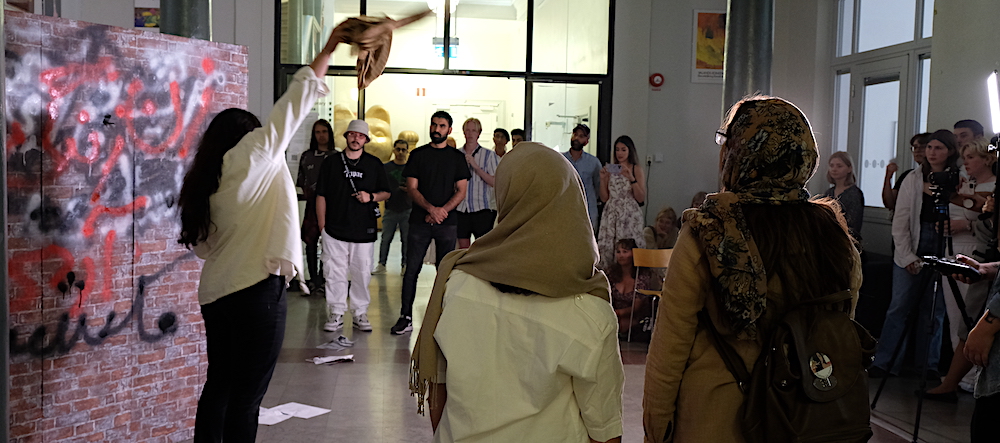
During the live performance, we utilize the same slogans found on the walls of cities in Iran. These slogans often elicit similar reactions from the regime, resulting in their removal or alteration to fit their own propaganda, thus sparking an ideological battle on the city walls.
Another component of the project is a digital art exhibition, which serves as a platform for Iranian activists and artists to safely share their works with others in Persian, English, and Swedish languages.
Nummer 11 (film)
“I was simply tired of my situation in Sweden as an asylum seeker and the number 11 tram was a place where I spent most of my time, considering that I lived at the last stop in Bergsjön. It was enough for me to travel one more time to the other end stop in Saltholmen and there I got the idea to make Number 11”
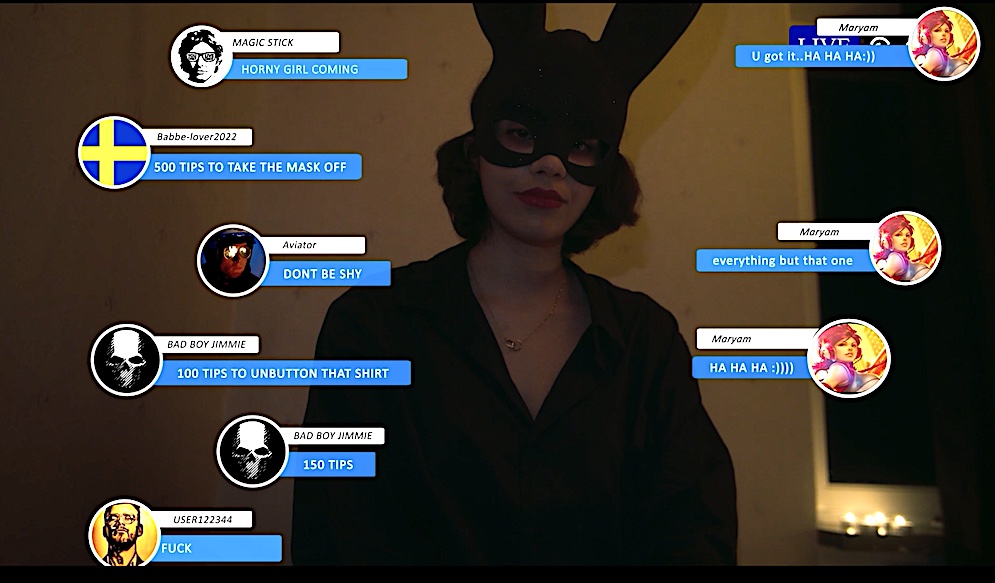
The plot revolves around Maryam, who is sitting on the 11 tram on her way to the sea. We soon understand that everything is not right, she receives a mysterious call about a job that she says she does not want. Soon we learn about what separates Maryam and her life from the others who live in the community.
You can see Nummer 11 during the exhibition at HDK-Valand and at the special screening on Monday 19 June at 18:00 in Bio Valand. Free but places limited, reserve your spot here eventbrite booking.
works in the exhibition
“Nummer 11” (2022)
- video
- dimensions: (13,18 Mins)
- venue: Room 2012 & Bio valand screening (19/06/2023)
“The Writings on the Wall” (2023)
- performance
- dimensions: (20 mins. approx.)
- venue: Vasagatan 50 Atrium


 exhibition.school